The Effects of Hard Water
Hard water, rich in minerals like calcium and magnesium, can have several side effects. For health, it may contribute to dry skin and hair, and in some cases, exacerbate conditions like eczema. In the household, hard water can lead to limescale buildup in pipes and appliances, reducing their efficiency and lifespan. Understanding these effects is crucial for maintaining both personal health and the longevity of your home appliances. Explore our solutions to mitigate these issues and ensure your water is as pure as possible.
Hard Water
Signs of hard water include
Feeling a film on your hands after washing them. This is caused by the soap reacting with calcium to form soap scum. You may need to rinse your hands longer if the water is hard.
Spots. These can appear on glasses and silverware coming out of the dishwasher. These are usually deposits of calcium carbonate.
Mineral stains. These show up on clothes when they come out of the washing machine. Clothes can wear out faster because of the harshness of hard water.
Less water pressure in your home. Mineral deposits can form in the pipes, essentially shrinking the interior diameter of the pipes and reducing water flow.
Hard water can contribute to dry skin and hair. Washing your hair frequently with hard water can leave your scalp feeling itchy.
If you notice problems with dry skin and hair, you may want to look into a water-softening system for your home. If that isn’t possible, talk with a dermatologist about moisturizers and hair products you can use to combat the effects of hard water.
Your local water company can provide accurate information on the quality of the water in your area. For example; Yorkshire Water, Anglian Water, Northumbrian Water, South West Water or order a free testing kit below!
We recommend our saltless PureCo System to help reduce hard water in your whole home without the risk of increased sodium levels. Good for you, and good for your boiler.
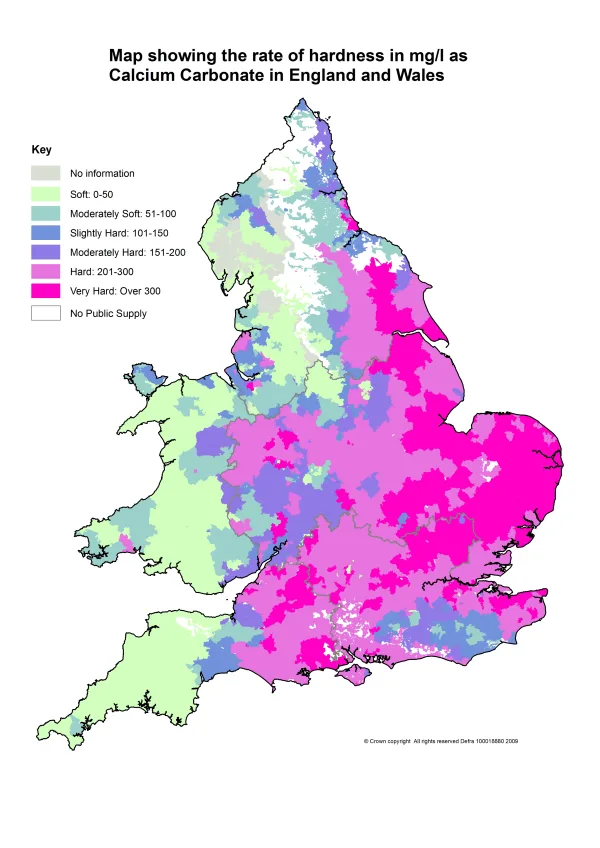
This map highlights the areas in the UK where hard water is prevalent.
Free Water Hardness Test Kit
Did you know you can easily test the hardness levels of your water at home with a simple strip test? We’ll ship it out to you with clear instructions and an easy to decipher pamplet, so you know what level of softening and filtration you need in your home.
How They Work
The test strips are coated with chemicals that react to the minerals that cause hard water and limescale.
How to Use Them
Collect a sample: Get a clean cup and fill it with cold water from the tap you want to test. Do not hold the strip under running water.
Dip the strip: Dip the test strip into the water sample for the specified amount of time (usually a few seconds).
Wait: Remove the strip and wait for the colors to develop (typically 15-20 seconds).
Read the results: Compare the color of the strip’s pads to the color chart on the packaging.

From as little at 80ppm you’ll notice your detergent is less affective, then 120ppm results in some scaling on your appliances and in your pipes, from 250 onwards your dishwasher is coating your plates in a film, your washing machine your clothes, and your shower you.
Once you know the level of hard water you are dealing with, compare it to our recommended PPM within the PureCo system, so you don’t over or under filter.
Explore More Solutions
-

Spring Inline Shower Filter
£49.00Softer-feeling showersReduce chlorine at the shower for fresher-feeling water, gentler skin and hair comfort, with a renter-friendly inline fit. -
Super Water Undersink Water Filter
£60.00Better drinking water at your kitchen tap under sinkEnjoy cleaner, better-tasting water straight from your kitchen tap with discreet under-sink filtration for everyday drinking and cooking. -
Premium Chrome Inline Shower Filter
£110.00Premium shower comfortUpgrade your shower with a chrome inline filter that helps reduce chlorine for fresher water, softer-feeling hair and calmer skin. -

Refillable Chrome Shower Head Filter Handset (Multi-Function)
From £56.00Filtered handheld showersA refillable shower handset that helps reduce chlorine while giving you flexible spray settings and fresher water every day. -
Mini Submersible Water Filter – 100L
£45.00Portable drop-in filterDrop this compact filter into jugs, tanks or bottles for simple, travel-friendly water improvement wherever you need it. -
Garden Hose Water Filter
£56.00Cleaner water outdoorsFilter chlorine at the hose for happier plants, safer pond top-ups, pet care, car washing and outdoor jobs that need gentler water.