Article Summary
This guide explains why chlorine remains essential for public health while exploring how whole house filtration can improve the quality of the water you use every day.
-
Discover why chlorine is one of the greatest public health innovations, how it destroys harmful bacteria, viruses and other micro-organisms, and why a chlorine residual is essential for keeping water safe as it travels through the distribution network.
-
Learn what happens when chlorine reaches your home, why it has already completed its job, and how it can affect the taste, smell and enjoyment of drinking water, tea, coffee, cooking and showering.
-
Understand the science behind chlorine, including the formation of hypochlorous acid (HOCl), how it disinfects water and how chlorine can also form disinfection by-products such as trihalomethanes (THMs).
-
Explore why water quality can still be affected after leaving the treatment plant through ageing infrastructure, leaks, pressure changes and contamination within the distribution system.
-
Find out how whole house water filtration and Aquatière’s exclusive Ceramet™ technology help reduce chlorine and a wide range of other contaminants, delivering cleaner, fresher water throughout your home or office.
For more than a century, chlorine has been one of humanity’s greatest public health achievements. It has prevented countless outbreaks of cholera, typhoid, dysentery and other waterborne diseases by making drinking water safe enough to travel from treatment plants to homes and businesses.
Without chlorine, modern municipal water systems simply would not exist as we know them.
However, there is an important distinction that is often overlooked.
Chlorine is designed to protect water during its journey. It is not intended to improve the quality of the water once it reaches your tap.
At Aquatière, we believe both statements can be true:
- Chlorine is absolutely essential for public health.
- Once the water reaches your home or office, removing chlorine produces healthier, better tasting and better smelling water.
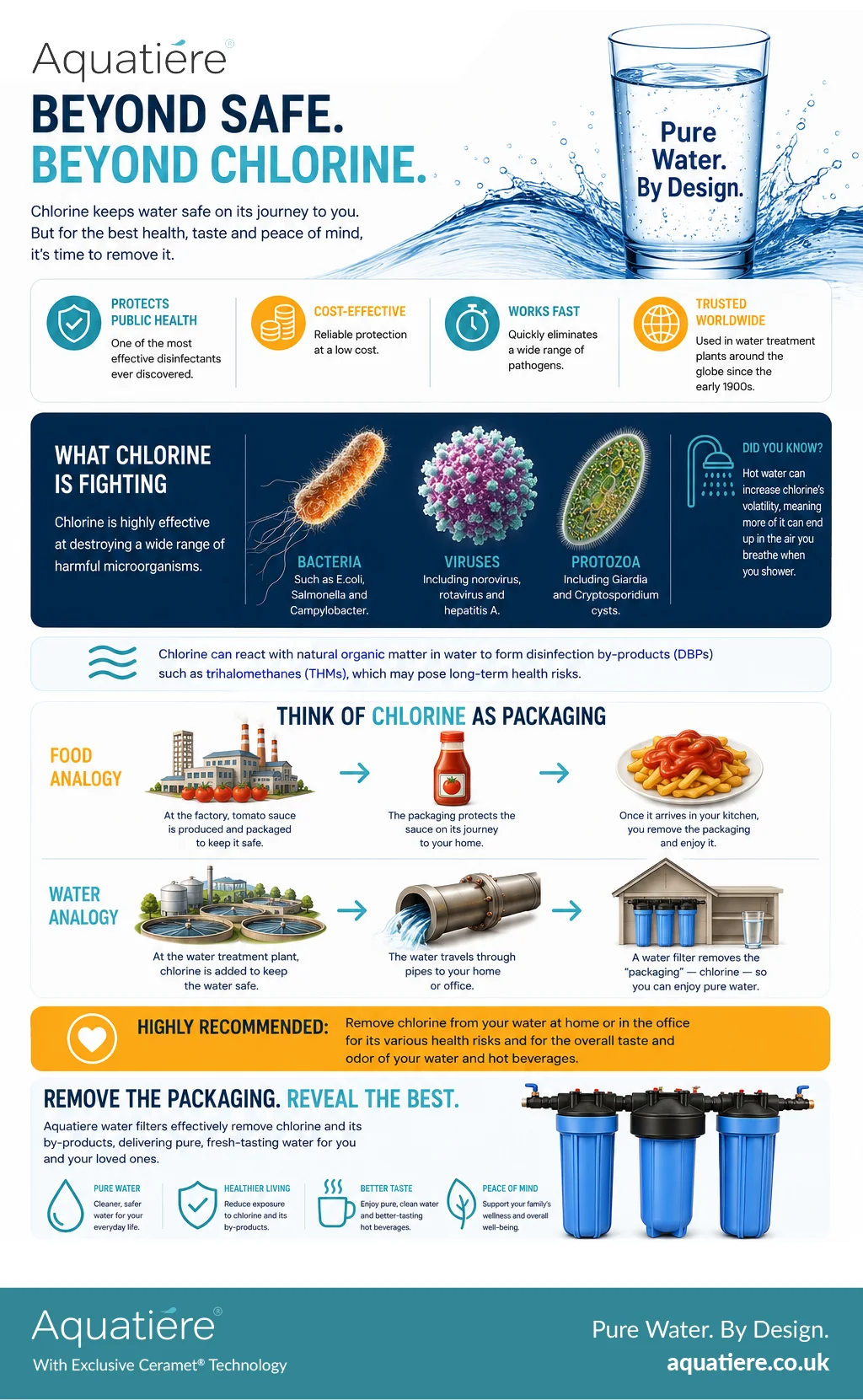
Think of chlorine as protective packaging. Packaging is essential while a product is being transported, but once it arrives safely, you remove the packaging before using what’s inside.
The same principle applies to your drinking water.
Why Water Needs Chlorine
Natural water contains enormous numbers of micro-organisms
Many are harmless.
Some are incredibly dangerous.
These include bacteria, viruses and protozoa that can cause serious illnesses including:
- Escherichia coli (E. coli)
- Salmonella
- Campylobacter
- Norovirus
- Rotavirus
- Hepatitis A virus
- Giardia
- Cryptosporidium
Before municipal water treatment became widespread, contaminated drinking water caused devastating disease outbreaks around the world.
Today, modern water treatment plants remove sediments, filter contaminants and disinfect the water before it enters the distribution network.
The final and most important protection is disinfection.
For most municipal systems worldwide, that disinfectant is chlorine.
Why Chlorine Is So Effective
Chlorine is remarkably efficient because it doesn’t simply trap microorganisms.
It destroys them.
When chlorine is added to water it undergoes an important chemical reaction.
Step 1 – Chlorine reacts with water
When chlorine gas dissolves in water:
Cl₂ + H₂O ⇌ HOCl + H⁺ + Cl⁻
This produces:
- Hypochlorous Acid (HOCl)
- Hydrogen ions (H⁺)
- Chloride ions (Cl⁻)
The star of the show is Hypochlorous Acid (HOCl).
This is the primary disinfecting compound responsible for making drinking water safe.
HOCl versus OCl⁻
Hypochlorous Acid can further dissociate:
HOCl ⇌ H⁺ + OCl⁻
creating:
- Hypochlorous Acid (HOCl)
- Hypochlorite ion (OCl⁻)
Although both disinfect water, they are not equally effective.
HOCl is typically 80 to 100 times more effective at destroying microorganisms than OCl⁻.
Water treatment plants carefully manage water chemistry and pH to maximise the amount of HOCl produced.
How HOCl Destroys Micro-organisms
Unlike a mechanical filter, chlorine chemically attacks pathogens.
It penetrates the cell wall
HOCl easily passes through bacterial cell membranes because it is electrically neutral.
It destroys enzymes
Inside the microorganism it oxidises essential enzymes that keep the cell alive. Without functioning enzymes the organism cannot produce energy or repair itself.
It damages DNA and RNA
HOCl attacks genetic material, preventing bacteria and viruses from reproducing.
The microorganism dies
Unable to function or reproduce, the pathogen is inactivated.
Why Chlorine Remains in the Water
Many people assume chlorine’s job finishes at the treatment plant.
It doesn’t.
Water may travel many kilometres through reservoirs, pumping stations and underground pipelines before reaching your property.
Without a disinfectant remaining in the water, bacteria could begin growing again inside the distribution system.
This remaining disinfectant is known as the chlorine residual.
It continues protecting the water throughout its journey.
But What Happens When the Water Reaches Your Home?
This is where the conversation changes.
The chlorine has done its job.
Its purpose was never to improve taste.
It wasn’t added to make your tea taste better.
It wasn’t added to improve coffee.
It wasn’t added to make showers more pleasant.
Its job was simply to keep the water microbiologically safe during transport.
Once the water reaches your property, continuing to consume chlorine offers little benefit but several disadvantages.
The Taste and Smell of Chlorine
Anyone who has visited a swimming pool recognises the smell immediately.
Even at much lower concentrations, chlorine can affect:
- Drinking water
- Tea
- Coffee
- Ice cubes
- Soups
- Cooking
- Baby formula
- Fresh fruit and vegetables washed under the tap
Removing chlorine often produces:
- cleaner tasting water
- fresher smelling water
- better coffee
- better tea
- improved cooking
- more enjoyable cold drinks
For many people, this improvement alone is reason enough to install a water filtration system.
Chlorine and Hot Water
Hot water creates another consideration.
As water is heated, chlorine becomes more volatile.
During showering and bathing, some chlorine can be released into the surrounding air where it may be inhaled.
While the levels found in municipal water are generally considered safe under drinking water regulations, reducing unnecessary exposure is a sensible approach, particularly for people who shower daily or spend extended periods in hot water.
Whole house filtration removes chlorine before it reaches your shower.
Chlorine Can Form Other Chemicals
Chlorine doesn’t always remain as chlorine.
When it reacts with naturally occurring organic matter in water, it can create compounds known as Disinfection By-products (DBPs).
One of the best known groups is:
Trihalomethanes (THMs)
Examples include:
- Chloroform
- Bromodichloromethane
- Dibromochloromethane
- Bromoform
Water companies carefully monitor these compounds to ensure they remain below regulatory limits.
However, many homeowners prefer to reduce exposure even further through effective water filtration.
What Does the Research Say?
Health authorities agree that the benefits of chlorination overwhelmingly outweigh the risks. Without chlorine, waterborne diseases would increase dramatically.
However, researchers continue to study the long-term effects of lifetime exposure to chlorinated water and its by-products.
Some studies have explored possible associations between long-term exposure to elevated concentrations of disinfection by-products and increased risks of certain health conditions, including some cancers and adverse pregnancy outcomes. The evidence is mixed and does not prove that chlorinated drinking water at regulated levels causes these conditions.
Even so, many people choose to reduce exposure where practical, particularly when effective filtration can do so without compromising the safety of the water entering their property.
Removing chlorine after the water reaches your home is very different from removing chlorine before it travels through the public water network.
Municipal disinfection remains essential. Point-of-use or whole house filtration simply takes over once the water has arrived safely.
What About Fluoride?
Many municipal water supplies also contain fluoride.
Fluoride is added in some regions to help reduce tooth decay.
Unlike chlorine, activated carbon alone generally does not remove fluoride effectively.
If reducing fluoride is important to you, specialist filtration technologies such as reverse osmosis are typically required.
Different filtration systems are designed to remove different contaminants, which is why choosing the correct system is important.
Can Water Become Contaminated Again?
Many people assume that because water leaves the treatment plant clean, it must arrive at every property in exactly the same condition.
In reality, water distribution systems are vast and complex.
Potential issues can include:
- ageing infrastructure
- leaking water mains
- pressure losses
- maintenance work
- biofilm development inside pipes
- contamination entering damaged sections of the network
Municipal water companies work continuously to minimise these risks, and maintaining a chlorine residual is one of the reasons treated water remains safe throughout the network.
Even so, point-of-entry filtration at the home or office provides an additional barrier by improving water quality immediately before use.
The Packaging Analogy
Imagine buying a bottle of tomato sauce.
At the factory:
- The sauce is made.
- It is packaged.
- The packaging protects it during transport.
When you arrive home:
You don’t eat the bottle.
You remove the packaging and enjoy what’s inside.
Chlorine works in much the same way.
It protects the water while travelling through the distribution system.
Once the water reaches your home, removing the chlorine allows you to enjoy cleaner, fresher and better tasting water.
Why Whole House Water Filtration Makes Sense
A whole house filtration system treats the water as it enters your property, providing cleaner water throughout the entire building.
This means cleaner water for:
- Drinking
- Cooking
- Tea and coffee
- Showers
- Baths
- Washing fruit and vegetables
- Protecting appliances
- Protecting plumbing fixtures
The Best of Both Worlds
Modern water treatment has saved millions of lives.
There should be no debate about the importance of chlorination in public water supplies.
But there is also a strong case for removing chlorine once it has completed its mission.
You don’t have to choose between safe water and enjoyable water.
With the right filtration system, you can have both.
The chlorine protects the water while it travels through the public network.
Your filtration system removes the chlorine when it arrives at your home or office.
Aquatiere’s Patented Ceramet™
On top of that, we have our own patented water filter technology called Ceramet. It’s a granular ceramic media is used in Aquatiere’s range of shower filters, tap filters and whole house filters.
Unlike common medias such as KDF and Granulated activated carbon, Ceramet removes 99% of chlorine in both hot and cold water, it also kills various bacteria including staphylococcus aureas which is known to cause eczema flare ups. Ceramet also removes 85% of flouride.
What Is Ceramet?
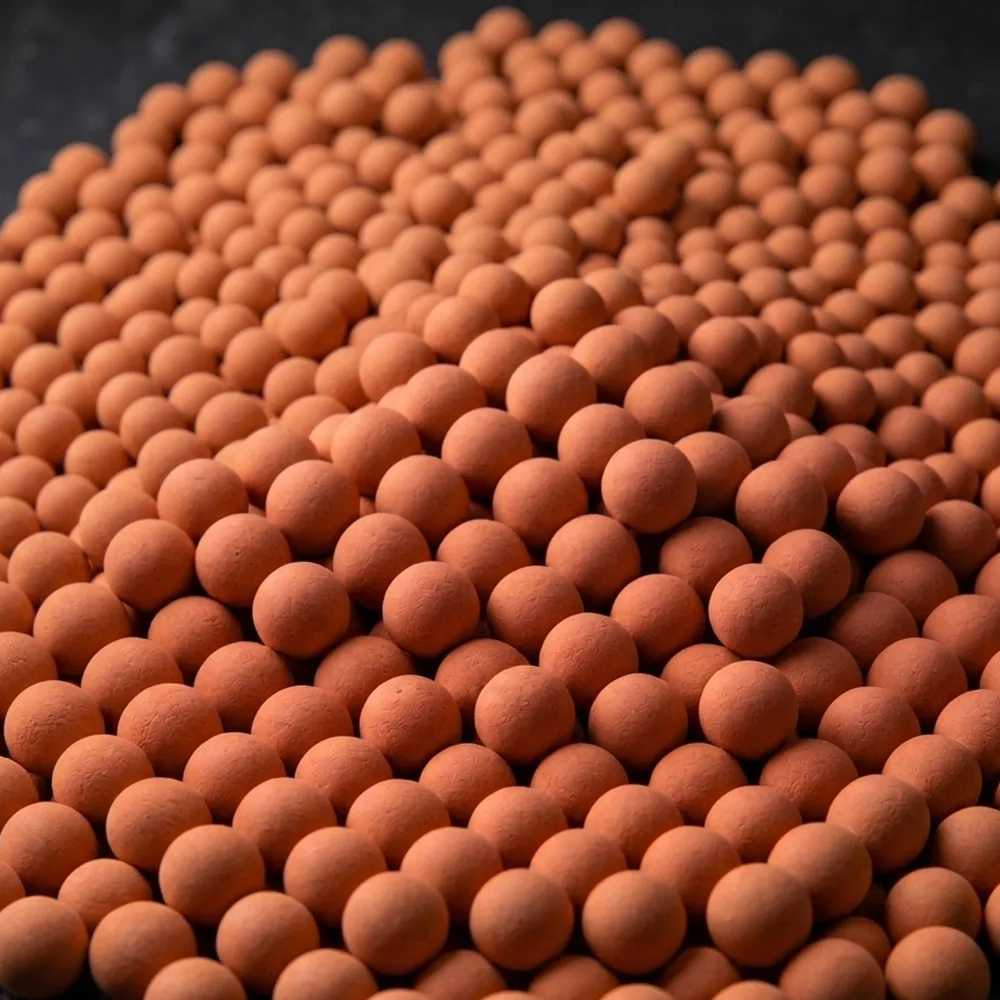
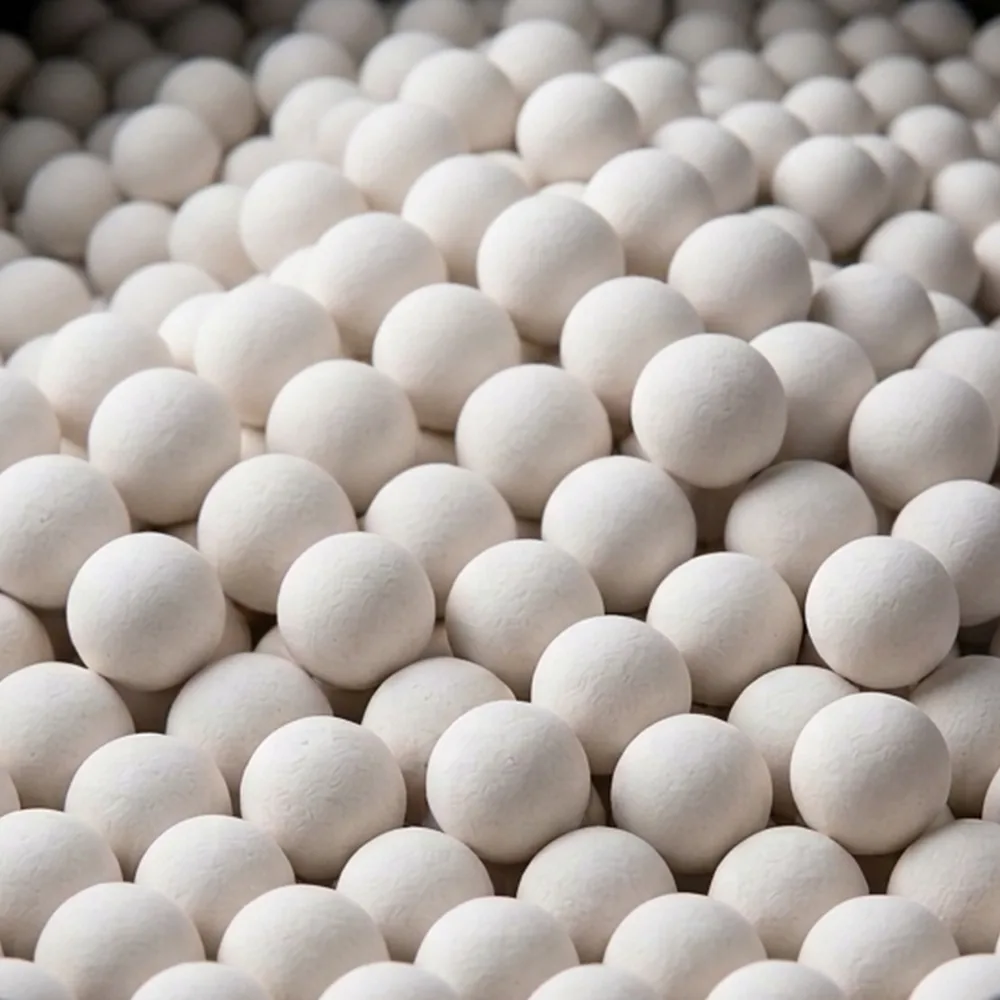
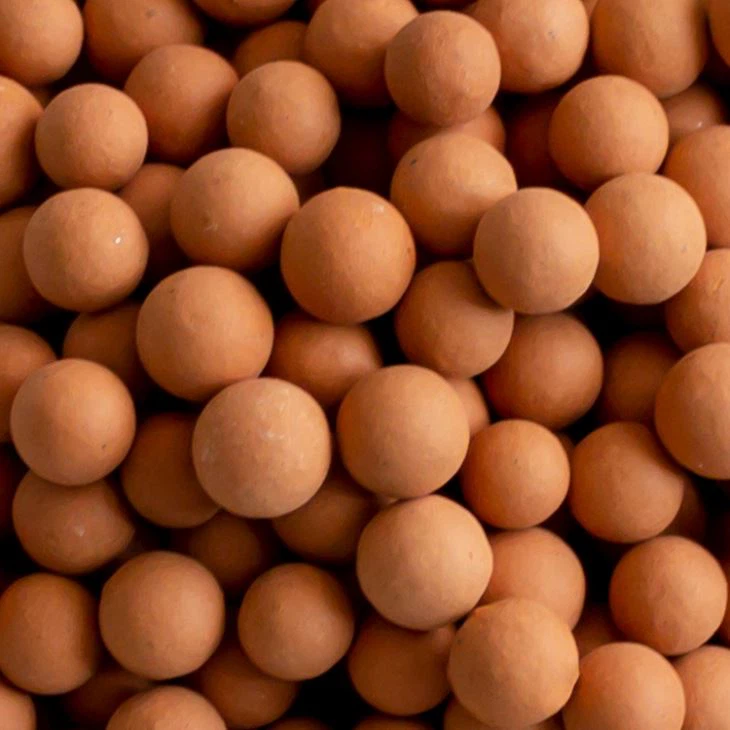
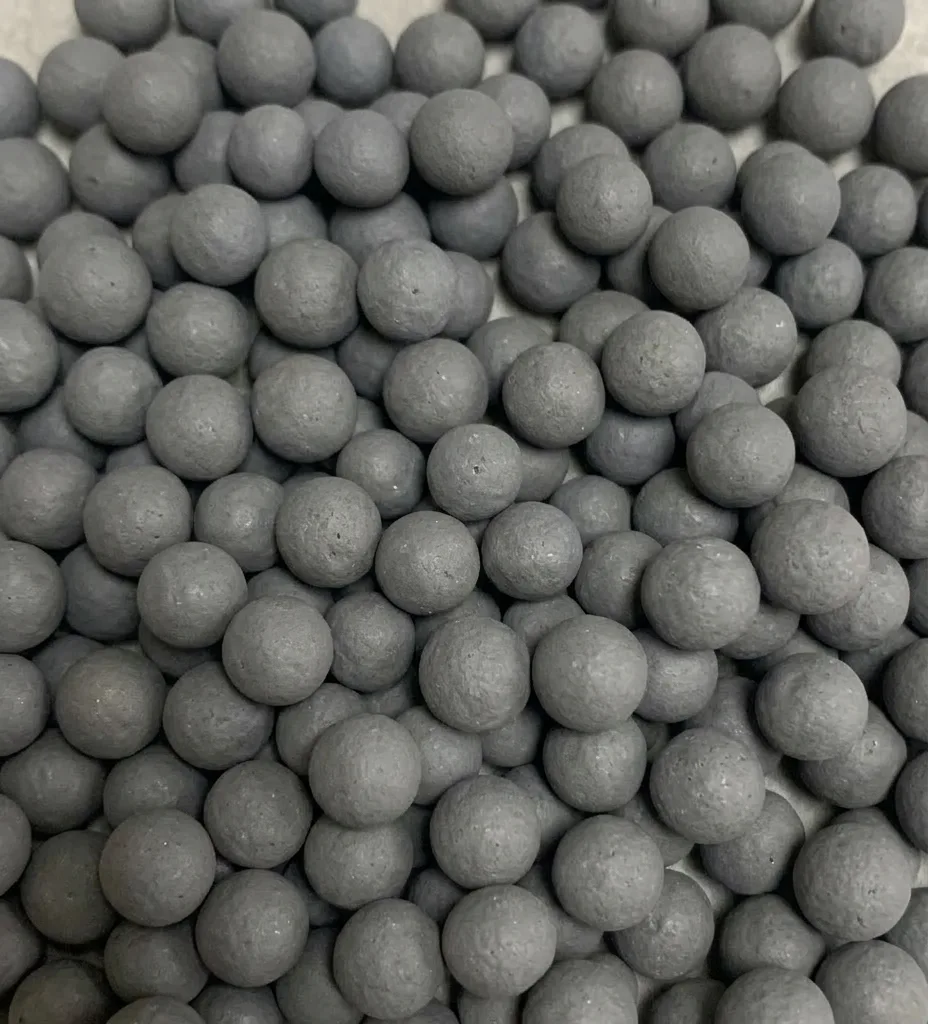
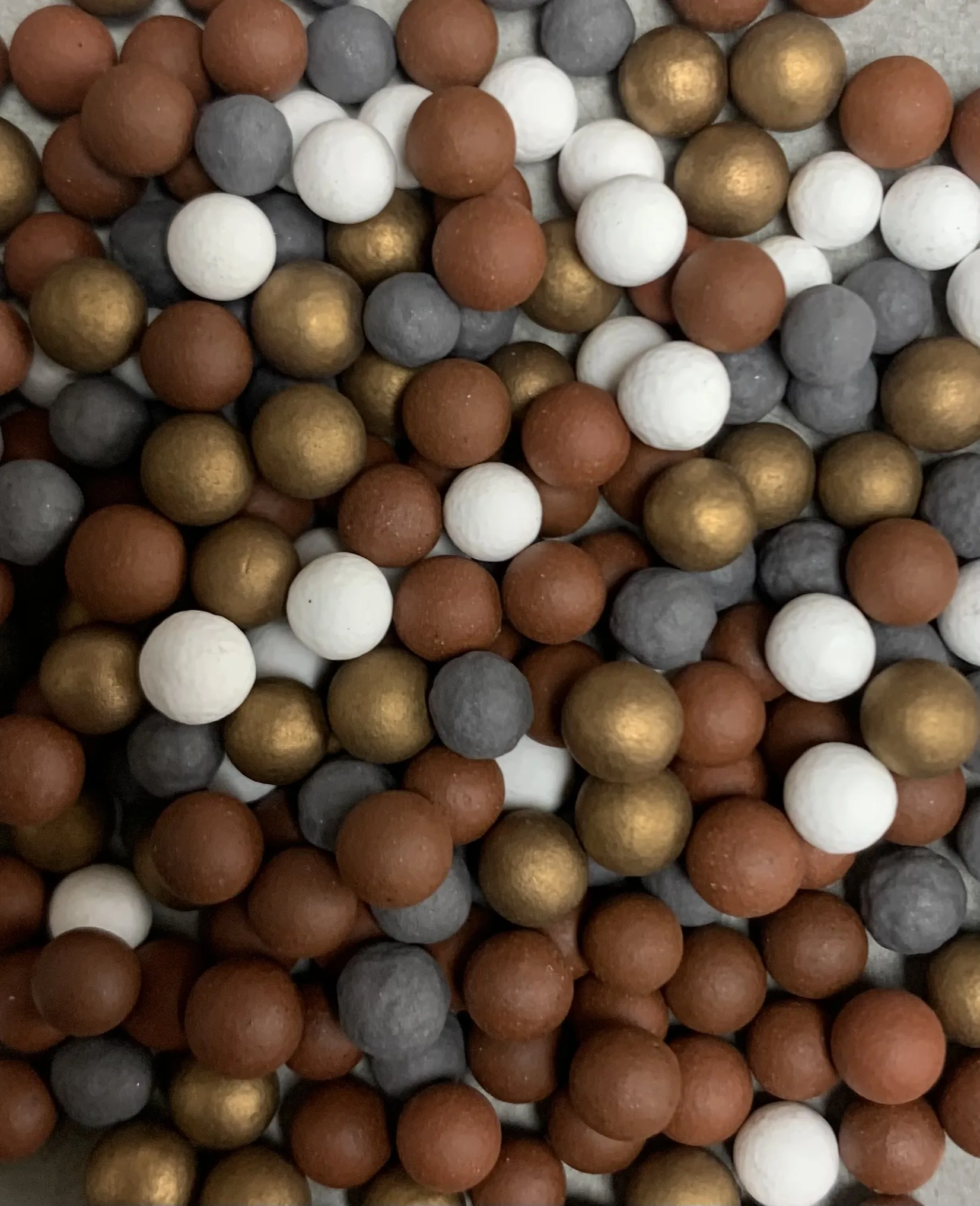
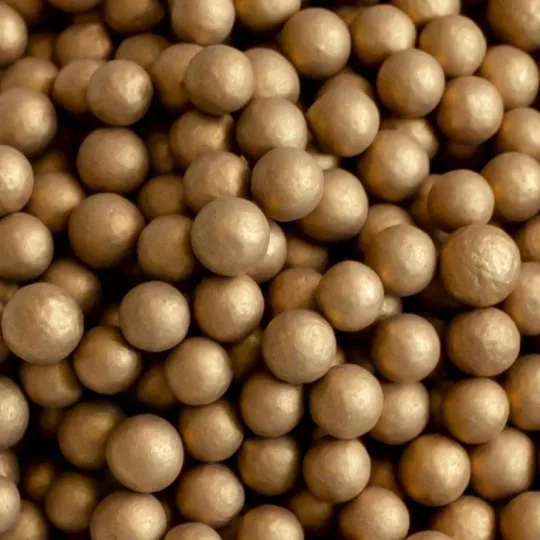
Ceramet is a natural porous ceramic media, formed into small spheres and engineered to improve water quality through both filtration and water conditioning.
Natural Filtration Media
Each Ceramet blend contains carefully selected minerals and metals, with different formulations available for water filtration and water softening applications.
Exclusive to Aquatiere
Ceramet is used exclusively throughout Aquatiere’s range of whole house water filters, water softeners, shower filters, garden filters and resin-based filtration systems.
Progressive Filtration
The granular Ceramet bed works similarly to a sand filter, trapping sediment while naturally improving its filtration efficiency as the filter matures.
Active Water Treatment
The media releases silver for bacterial control, beneficial minerals for water improvement and active oxygen to help reduce scale formation.
Chemical Reduction
Depending on the specific filter configuration and operating conditions, Ceramet is designed to reduce a broad range of contaminants, including chlorine, THMs, nitrates, heavy metals and other unwanted substances.
High Performance
Ceramet combines the benefits of KDF media with active filtration and chemical absorption, providing comprehensive water treatment in a compact media bed.
Performance Guide
| Contaminant | Typical Reduction |
|---|---|
| Chlorine | 98% |
| Chloramines | 98% |
| Fluoride | 85% |
| Escherichia coli (E. coli) | 99% |
| Herbicides | 99% |
| Pesticides | 99% |
| THMs, ECBs & TMEs | 99% |
| Hormones and cysts | 99% |
| Trihalomethanes (THMs) | 99% |
| Pseudomonas | 98% |
| Solvents (including PCBs & PAHs) | 98% |
| Benzene | 95% |
| Sediment | 99% |
| Sub-micron plastic particles | Reduces |
| Trace heavy metals | Reduces |
| Aluminium (trace levels) | Reduces |
| Arsenic (trace levels commonly found in tap water) | Reduces |
| Lead (trace levels) | Reduces |
| Bad tastes | Reduces |
| Odours | Reduces |
Note: Performance figures are provided as a guide and may vary depending on water quality, contaminant concentrations, flow rate and operating conditions.
At Aquatière, we believe that’s exactly how water should be.
Pure Water. By Design.
Aquatiere Chlorine Infographic